
Metal Tile Corner Trim for Tile & Wood: The Professional's Edge
In the world of fine carpentry and tile installation, the difference between a good finish and a flawless one lies in the details. The junction where two surfaces meet — be it tile-to-tile or tile-to-wood — presents a critical challenge. This is where decorative metal trim, particularly tile corner trim, transcends its functional role to become the defining signature of craftsmanship and design intelligence.
While humble plastic profiles handle basic protection, metal trim for carpentry and tile offers an unparalleled fusion of durability, precision, and aesthetic elegance. For contractors, architects, and discerning DIYers, it is the unsung hero that elevates a project from standard to exceptional, providing a clean, protected, and visually striking transition.
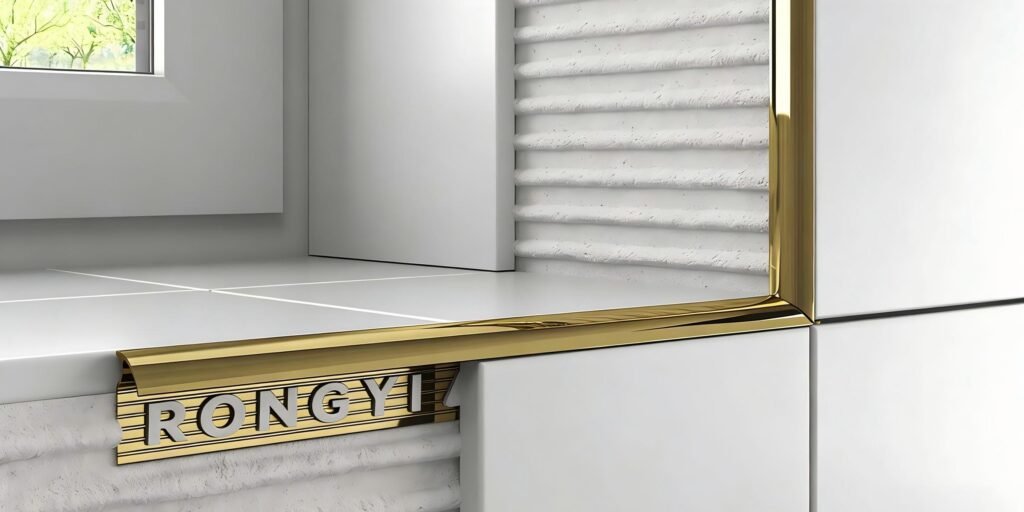
Beyond Protection: The Multifaceted Role of Metal Tile Corner Trim
At its core, tile corner trim serves several non-negotiable technical functions:
Armor for Vulnerable Edges: The corner of any tiled surface is its weakest point, prone to chipping and impact damage. A robust metal profile acts as a permanent shield, preserving the integrity of expensive tile materials for decades.
The Flawless Transition Creator: It seamlessly bridges planes with different materials or colors, creating a crisp, intentional line that frames the installation.
The Safety Essential: By covering raw, often sharp tile edges, it creates a smooth, safe surface, a critical consideration in family homes and commercial spaces alike.
However, decorative metal trim achieves its highest purpose when visual appeal meets function. Rather than just a practical part, it becomes a deliberate design choice. It adds structure, contrast, and a finished look that simple grout or a caulk line simply cannot match.
The Material Palette: Choosing Your Metal for Tile and Wood
The choice of metal defines the trim’s character, performance, and suitability for your project.
Brushed Stainless Steel: The epitome of modern professionalism. Its low-sheen, linear grain offers superb scratch resistance, a neutral tone that complements both cool and warm palettes, and is exceptionally easy to maintain. Ideal for contemporary kitchens, commercial bathrooms, and high-traffic areas.
Anodized Aluminum: Where color meets durability. Through an electrochemical process, aluminum can be infused with permanent, fade-resistant colors like matte black, champagne gold, or brushed nickel. The anodized layer is incredibly hard, making it resistant to corrosion and wear. Perfect for adding a subtle or bold accent to a design scheme.
Solid Brass (Lacquered or Living): The choice for luxury and tradition. Polished brass delivers timeless warmth and opulence. For a low-maintenance option, lacquered brass retains its shine indefinitely. For those who appreciate patina, “living” (unlacquered) brass develops a unique, evolving character over time, beautifully pairing with classic subway tile, herringbone wood floors, and custom cabinetry.
Mastering Application: Where Metal Trim Excels
The versatility of metal tile corner trim is one of its greatest strengths. Its applications span from purely practical to highly decorative:
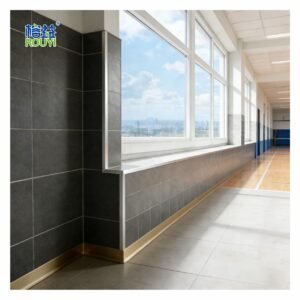
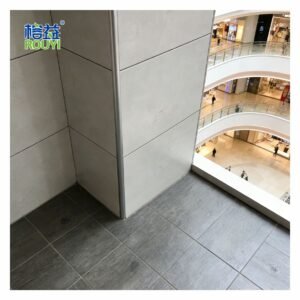
The Classic Tile Corner & Edge: The fundamental use of trim is for basic protection and finishing. Installing L-shaped profiles on wall corners or countertop edges delivers maximum impact resistance and a clean visual line; while on stair nosings or floor perimeters, robust edge trim ensures safety and a fully finished appearance.
The Carpentry-Tile Interface: This is where detail matters most. Using a schluter-type profile or a custom metal transition strip where a tiled floor meets a wooden one manages differences in height, allows for material expansion, and creates a beautiful delineation between zones.
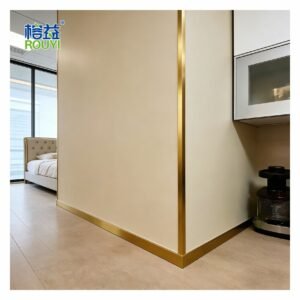
The Decorative Inlay & Accent: Think beyond corners. Thin, elegant metal trims can be used to create linear accents within a tile field, frame a niche or mirror, or even be integrated into custom woodwork as a sophisticated detail, blurring the lines between tile installation and fine carpentry.
Why Intelligent Design Relies on Metal Trim: An Engineering Perspective
From a specification standpoint, metal trim offers tangible benefits that justify its selection:
Long-Term Value & Durability: Unlike plastic, metal does not become brittle with age or UV exposure. It withstands cleaning chemicals and physical impact, ensuring the installation ages gracefully with minimal maintenance.
Precision & Ease of Installation: High-quality metal profiles are engineered for consistency. Their rigidity makes them easier to set flush and straight during tile installation compared to flexible alternatives, resulting in a more professional outcome.
Hygiene & Cleanability: The non-porous, seamless surface of metal is inherently hygienic, preventing moisture ingress and mold growth—a critical factor in wet areas—and is effortlessly wiped clean.
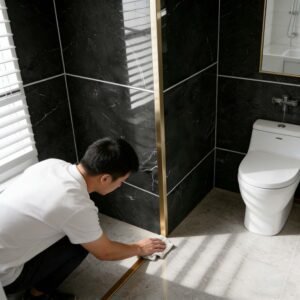
Selecting and Specifying the Right Profile
For project success, consider these key factors when choosing your decorative metal trim:
Profile Shape: Match the profile to the edge condition. Square edge for a minimalist look, rounded for a softer feel and enhanced safety, or beveled for a distinct shadow line.
Finish & Color Coordination: Select a finish that either blends seamlessly with the tile (for a subtle, unified look) or contrasts intentionally (to define and frame). Always order samples to view under project lighting.
Gauge & Quality: Thicker gauge metals (e.g., 16-gauge) offer superior rigidity and impact resistance. Inspect the finish for uniformity and the edges for smoothness—hallmarks of quality manufacturing.
The Final Detail
In architectural detailing, what separates the ordinary from the extraordinary is a commitment to every junction and transition. Decorative metal trim for carpentry and tile is not merely an accessory; it is the final piece of the puzzle that ensures durability, safety, and refined aesthetics. It answers the functional need for protection while satisfying the design desire for beauty and clarity. For your next project, look beyond basic solutions. Specify a metal tile corner trim that provides not just an edge, but an elegant, enduring statement. It is a testament to the understanding that true craftsmanship is found not just in the large surfaces, but in the careful, considered beauty of the lines that connect them.