
Tile Edge Shape Selection Guide: Choosing Stainless Steel Decorative Trim
In modern architectural finishes, stainless steel decorative tile trim has evolved from a purely functional edge protector into a critical design element that defines style, ensures durability, and elevates the perceived value of any tiled surface. However, with multiple profile shapes available—from minimalist square edges to pronounced rounded noses—selecting the right one can be the difference between a project that looks professionally finished and one that falls flat.
This definitive guide is designed for contractors, architects, and specification managers. We will demystify the selection process for stainless steel tile trim shapes, providing clear criteria based on aesthetics, functionality, safety, and project type. By understanding the distinct advantages of each profile, you can make an informed choice that aligns perfectly with your design vision and performance requirements.
Part 1: The Four Primary Stainless Steel Trim Shapes and Their Applications
The shape of the trim, or its “profile,” determines its visual impact and practical role. Here are the four fundamental types:
| Profile Shape | Visual & Functional Characteristics | Ideal Application Scenarios |
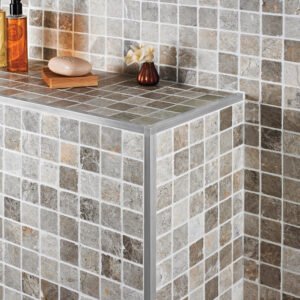
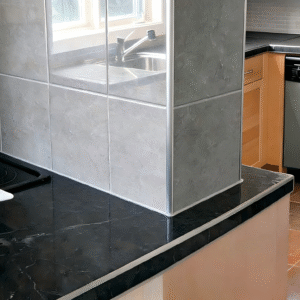
| Square Edge | Creates a sharp, clean, and ultra-modern line. Offers a minimalist look that emphasizes geometric precision. | Contemporary interiors, commercial lobbies, shower niches, backsplashes, and any design seeking a crisp, linear aesthetic. |
| Rounded Edge | Provides a smooth, softened contour. Enhances safety by eliminating sharp corners and is easier to clean. | High-traffic areas, family homes, hospitals, schools, swimming pool copings, and locations where user safety is paramount. |
| Coved / Bullnose Edge | Features a fully rounded, bullnose finish that seamlessly integrates the tile surface with the edge. Creates a gentle, flowing transition. | Stair tread nosings, countertop edges, bench tops, and any exposed edge where a smooth, tactile, and highly finished appearance is desired. |
| Rebated / L-Shaped Edge | Designed with a “ledge” or lip to hold tile or other materials. Provides a secure fixing point and a robust frame. | Creating clean thresholds at doorways, framing tile panels, or transitioning between different floor materials (e.g., tile to wood). |

Part 2: The Decision Matrix: How to Choose the Right Shape
Selecting the optimal shape is a systematic process. Consider these four key factors in order:
Aesthetic Intent (The Primary Driver)
Modern & Minimalist: Choose a Square Edge for a razor-sharp, graphic line.
Soft & Organic: A Rounded or Bullnose Edge will complement curved forms and natural materials.
Structured & Framed: An L-Shaped Edge can act as a deliberate “picture frame” for a tile area.
Functional & Safety Requirements
High-Impact Zones (Stairs, Entrances): Prioritize safety with a Rounded or Bullnose profile.
Wet Areas (Showers, Pools): Ensure proper water runoff; a slight slope on a Coved Edge is ideal.
Heavy Traffic (Commercial Floors): Opt for a robust, easy-to-clean profile like a Rounded Square.
3.Tile Type and Thickness
Thin Porcelain Panels: Pair with a delicate Square or Pencil Round edge to maintain elegance.
Thick Natural Stone or Terrazzo: A substantial Bullnose or Rebated Edge can better support and frame the material’s weight and depth.
Always verify the trim’s slot depth matches your tile thickness.
4.Installation Location
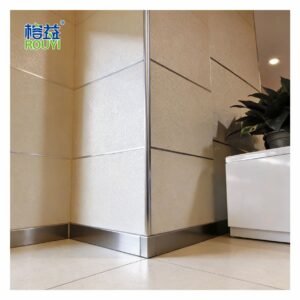
Wall Corners (Internal/External): L-Shaped corner trims are standard.
Floor-to-Wall Transitions: A Rounded Top with a flat leg is common.
Expansion Joints: Specific flexible Surface-Mounted profiles are required.
Part 3: Common Selection Pitfalls and How to Avoid Them
Mistake 1: Choosing based on price alone, leading to a mismatched aesthetic.
Solution: Treat trim as a design investment. Sample physical profiles against your actual tile.
Mistake 2: Overlooking the finish (e.g., Brushed, Mirror, Satin).
Solution: The finish must complement the shape. A mirror finish accentuates a square edge’s sharpness; a brushed finish softens a rounded edge.
Mistake 3: Ignoring substrate and installation method.
Solution: Confirm the chosen profile is compatible with your adhesive and substrate system. Some shapes require specific installation techniques.
Conclusion: Precision in Profile, Perfection in Finish
The selection of your stainless steel tile trim shape is a definitive detail that synthesizes engineering and design. It is not a mere accessory but the final stroke that ensures longevity, safety, and visual coherence.
For project managers and specifiers, the correct choice streamlines installation, reduces callbacks, and delivers a result that clearly communicates professionalism. By applying the decision framework outlined above—balancing form, function, and context—you can specify with confidence, ensuring every edge and corner contributes to a flawless, enduring finish.
Ready to Specify with Confidence?
Explore our technical catalogs detailing our full range of 304 & 316 Grade Stainless Steel Trim Profiles, available in all standard and custom shapes. Download CAD files, request physical samples to evaluate finish and proportion firsthand, or consult directly with our engineering team for complex project specifications.